Hi there, I’m Amirhossein Eskorouchi!

I am a Machine Learning and Optimization Researcher with more than four years of experience developing AI methods and intelligent decision systems. I am also an Industrial and Systems Engineering (ISE) Ph.D. Candidate at Mississippi State University (MSU), where I am fortunate to conduct my doctoral research under the guidance of Dr. Haifeng Wang and Dr. Mohammad Marufuzzaman.

My research focuses on developing reliable and decision-relevant artificial intelligence. I specialize in computer vision and optimization-guided learning, integrating domain knowledge, physical constraints, and mathematical optimization into machine learning to improve model reliability, interpretability, and generalizability under limited and heterogeneous data. I apply these methods to real-world decision problems in healthcare, intelligent manufacturing, and smart agriculture.

My work spans the complete research and development lifecycle, from problem formulation and algorithm design to large-scale experimentation, rigorous validation, research dataset development, reproducible software, and deployment-oriented prototyping. My goal is to translate methodological advances into practical intelligent systems that support better decisions in complex scientific and engineering environments.

Through interdisciplinary collaborations in industrial and systems engineering, sustainable bioproducts, radiation oncology, and biomedical research, I have contributed to projects supported by USDA-NIFA, NIH, and the Mississippi Institutions of Higher Learning. Alongside my research, I mentor graduate and undergraduate researchers and contribute to engineering education, research leadership, and professional service.

Professional portrait of Amirhossein Eskorouchi

Research

My research combines machine learning and mathematical optimization to develop reliable and decision-relevant methods for complex engineering and scientific applications.

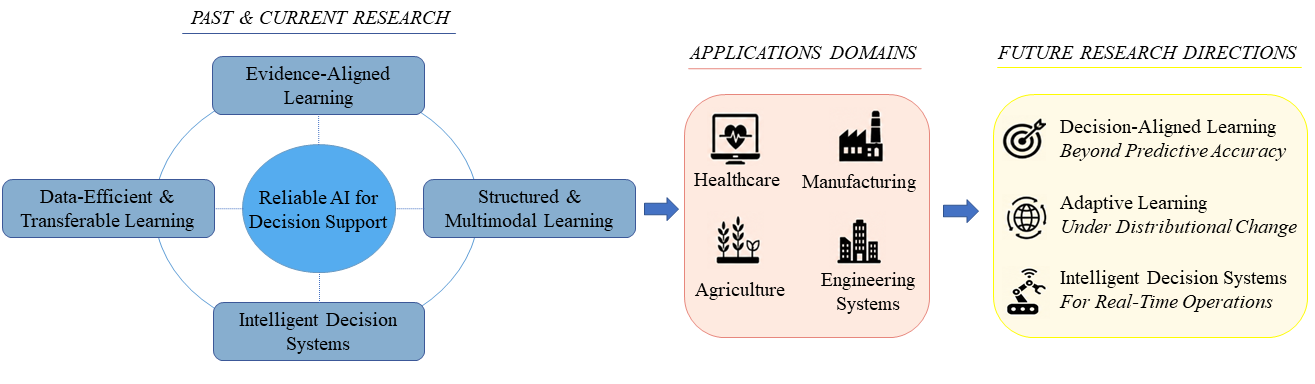
Research roadmap connecting evidence-aligned learning, data-efficient learning, structured and multimodal learning, and intelligent decision systems with application domains and future research directions
An overview of my research roadmap.
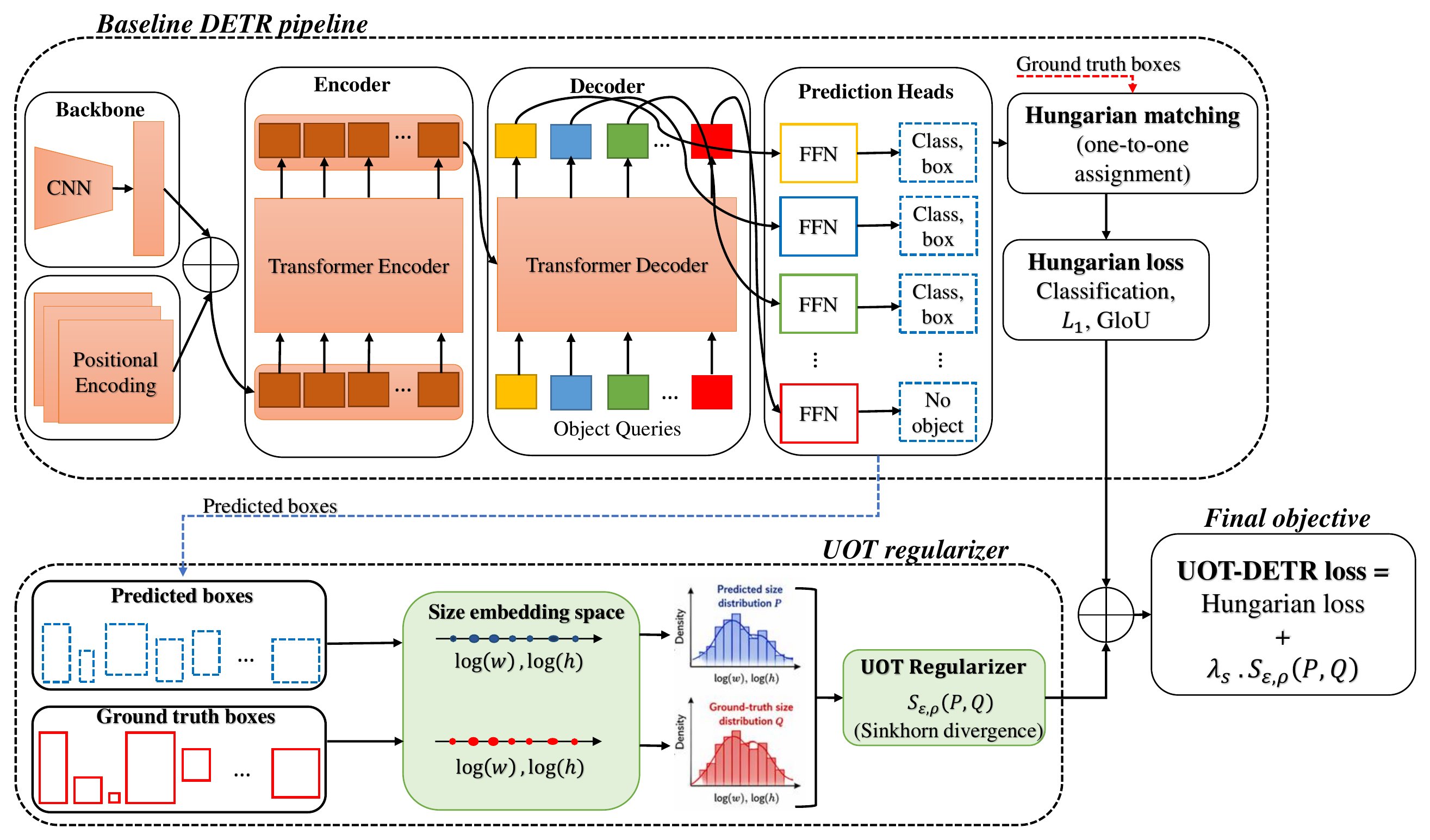
Architecture of UOT-DETR showing the baseline DETR pipeline and the unbalanced optimal transport regularizer
UOT-DETR integrates population-level size-distribution regularization into DETR training.

Distributionally Constrained Visual Quality Measurement Using Unbalanced Optimal Transport: Wood-Chip Size Estimation for Manufacturing Process Monitoring

Under review at Decision Support Systems

CodeDatasetProject page

Note:The repository is available; complete code and experimental results will be added after the corresponding manuscript is published.

Description: Conventional object detectors optimize individual detections but may fail to recover the physical size distribution needed for manufacturing quality decisions. UOT-DETR addresses this problem by adding an unbalanced optimal transport regularizer to DETR training, encouraging the predicted wood-chip population to preserve the reference size distribution while retaining the standard DETR inference process.

Outcome: UOT-DETR achieved an mAR50 of 95, an overall mAR50-95 of 72, and a small-object mAR50-95 of 42 on dense real-world wood-chip imagery. Across ten paired experimental seeds, it improved small-object mAR50 by 24.7 percentage points and small-object mAP50 by 15.4 percentage points over DETR, with the largest gains occurring in medium- and high-clutter scenes. The training-time regularizer introduces no inference-time overhead.

Project support: USDA-NIFA
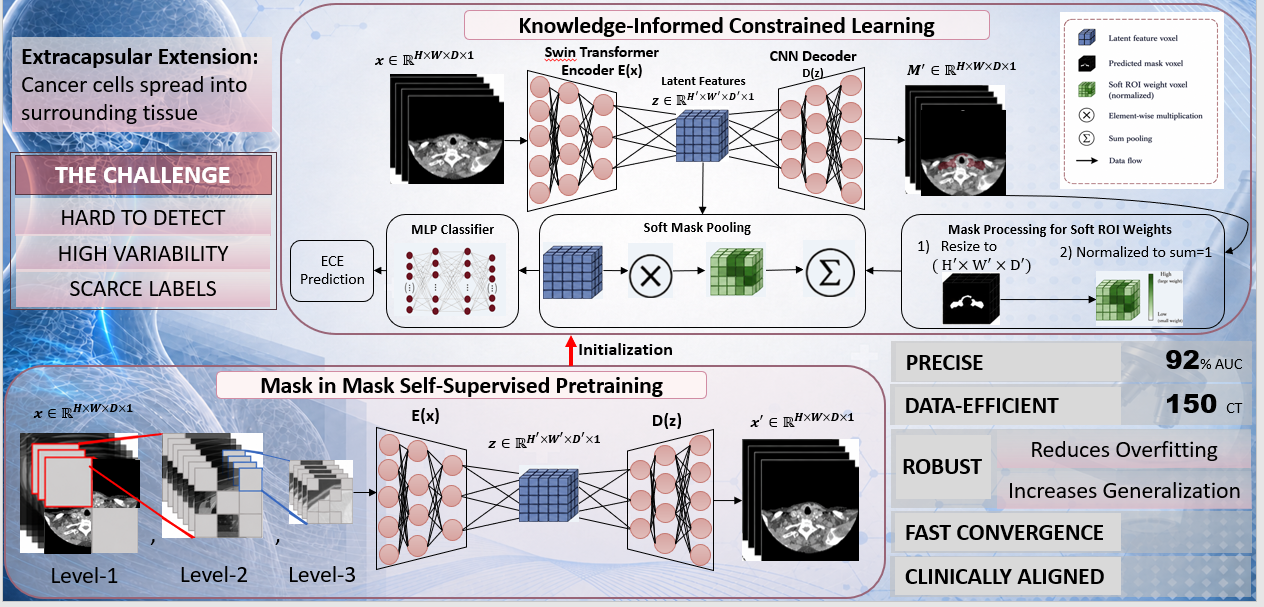
Knowledge-informed constrained learning framework combining 3D SwinUNETR, anatomical segmentation, soft mask-guided pooling, and self-supervised pretraining for extracapsular extension assessment
Anatomical knowledge constrains both representation learning and the evidence used for ECE classification.

Knowledge-Informed Constrained Learning for Data-Efficient Extracapsular Extension Assessment in Head and Neck CT

Under review at Medical Image Analysis

CodeConference paperProject page

Note:The repository is available; complete code and experimental results will be added after the corresponding manuscript is published.

Description: Extracapsular extension, the spread of cancer beyond a lymph-node capsule, is a major prognostic factor in head and neck cancer, but its preoperative identification on CT is difficult because the imaging signs are subtle and pathology-confirmed labels are scarce. Rather than learning from the entire scan or using segmentation only as preprocessing, this framework embeds lymph-node anatomy directly into both feature learning and decision-making. A dual-output 3D SwinUNETR jointly localizes nodal and perinodal regions and classifies ECE, while the predicted mask forms soft spatial weights that determine which latent features reach the classifier. Clinically informed mask expansion models disease spread beyond the nodal boundary, and Mask-in-Mask pretraining on approximately 1,500 unlabeled CT volumes improves learning under limited supervision.

Outcome: On 150 patients with pathology-confirmed ECE status, the proposed model achieved an accuracy of 0.924, an AUC of 0.928, a sensitivity of 0.926, and a segmentation Dice score of 0.821. It achieved the strongest accuracy, AUC, sensitivity, and Dice among the evaluated methods. At inference, the model predicts its own anatomical region and uses that prediction to guide classification, preserving a fully automatic pathway while grounding decisions in clinically meaningful evidence.

Project support: NIH-USA

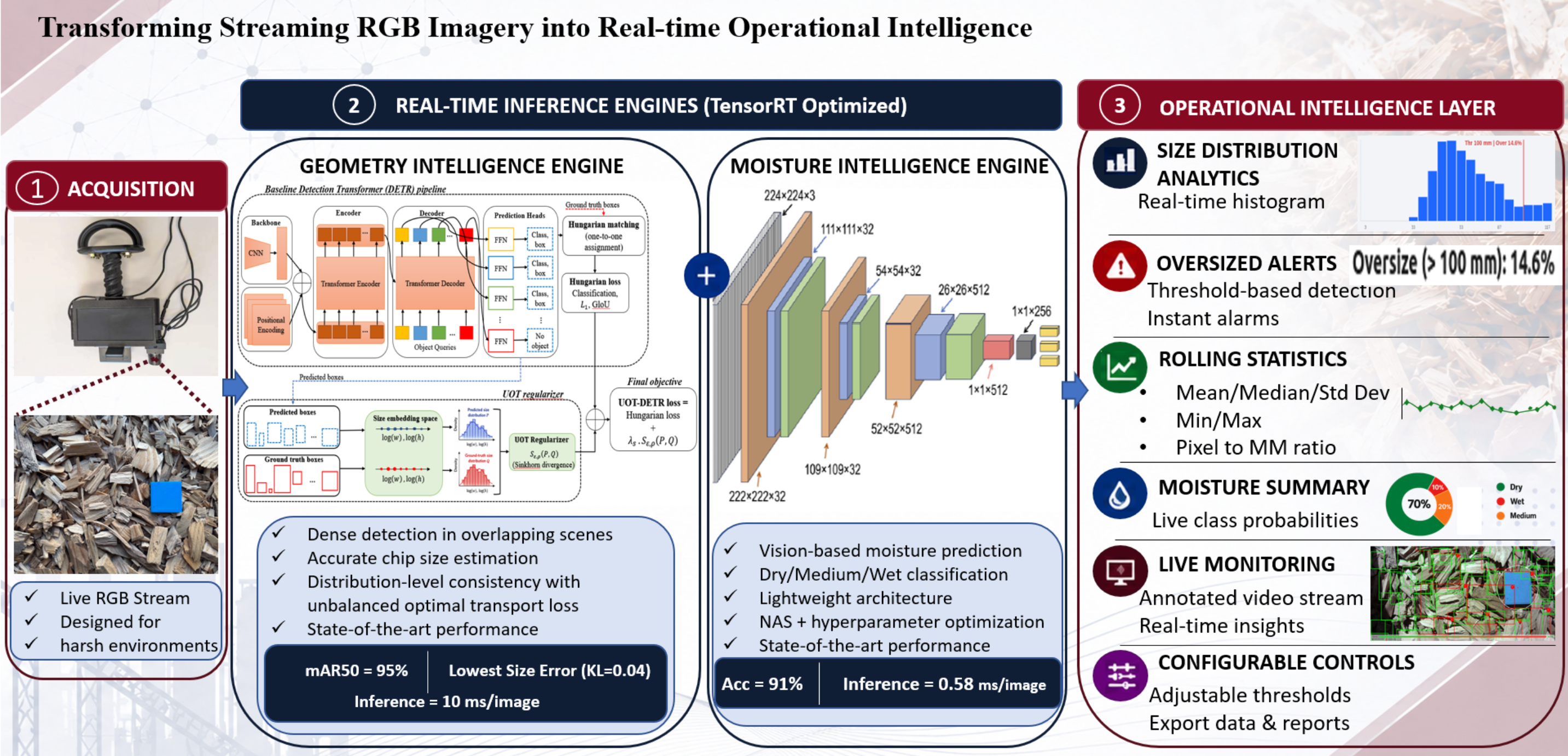
Wood-Chip Monitor workflow transforming streaming RGB imagery through TensorRT-optimized geometry and moisture inference into operational quality intelligence
Wood-Chip Monitor transforms streaming RGB imagery into local, operator-facing quality intelligence.

Wood-Chip Monitor: An Edge-AI System for Real-Time Wood-Chip Quality Evaluation

Finalists, 2026 IISE DAIS Student Mobile/Web App Competition

CodeDemoPaperAwardProject page

Description: Conventional wood-chip quality assessment relies heavily on periodic sampling and offline measurements. Wood-Chip Monitor moves this process closer to real-time operations through a portable NVIDIA Jetson and TensorRT platform that combines dense chip detection, physical size estimation, size-distribution monitoring, oversize alerts, and image-based moisture assessment. A local dashboard converts the model outputs into rolling statistics, configurable quality rules, event records, and live visual feedback for operators.

Outcome: The project translates research models into a complete edge-AI prototype spanning image acquisition, accelerated inference, physical measurement, quality analytics, backend services, and an operator-facing interface. The geometry engine achieved an mAR50 of 95% with a reported size-distribution error of KL = 0.04, while the lightweight moisture engine achieved 91% classification accuracy.

Project support: USDA-NIFA

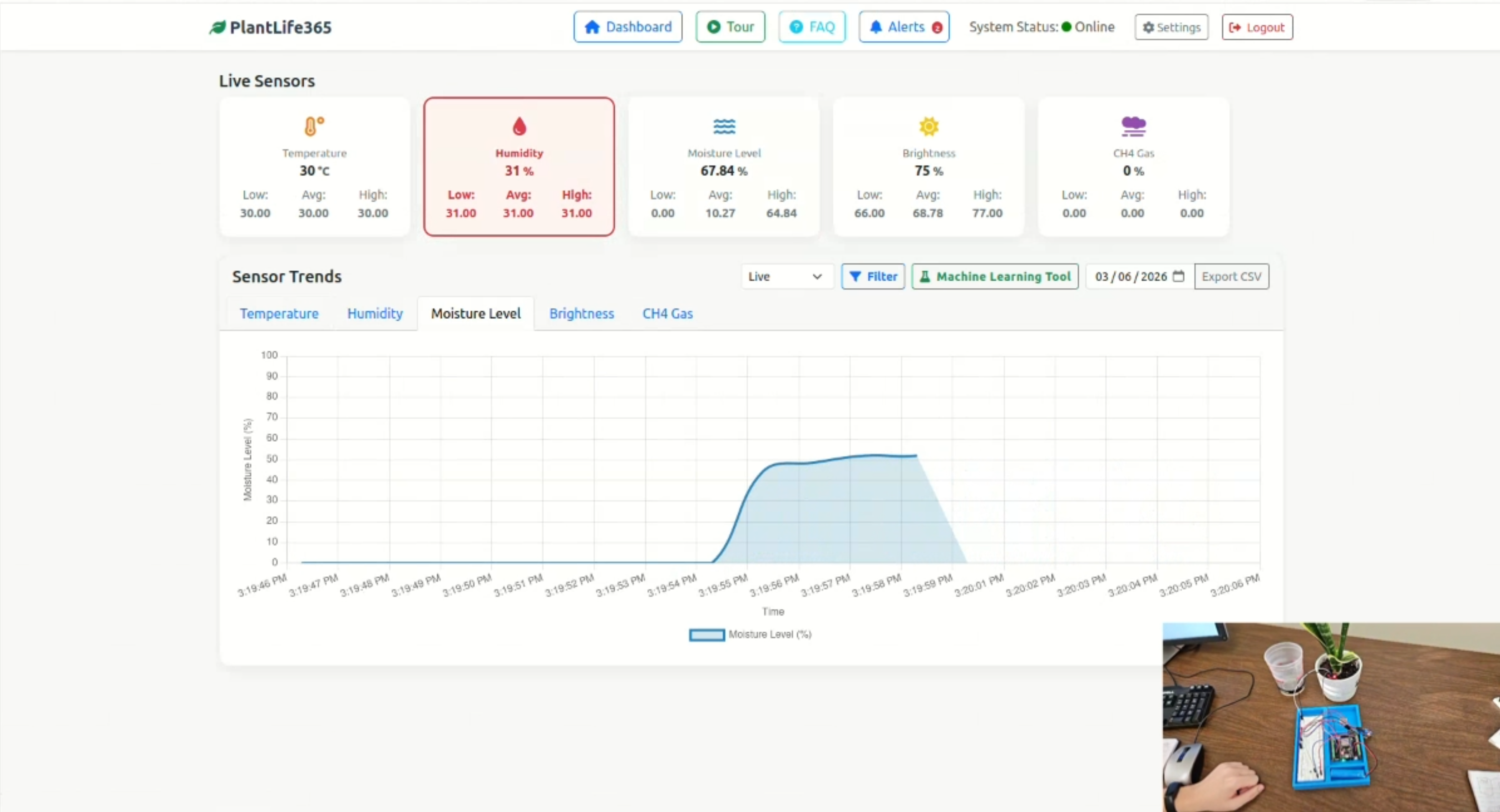
PlantLife365 dashboard showing live environmental sensors, alerts, historical trends, exploratory machine-learning tools, and the physical sensing prototype
PlantLife365 connects multimodal environmental sensing with live monitoring, historical analytics, alerts, and data exploration.

PlantLife365: An IoT and Machine-Learning Platform for Plant Health Monitoring

First Place, 2026 IISE DAIS Student Mobile/Web App Competition

CodeAwardProject page

Description: Plant health management requires continuous context rather than isolated sensor readings. PlantLife365 connects an ESP32 multisensor node with an authenticated Django platform to collect temperature, humidity, soil-moisture, light, gas, and optional image data. The platform organizes these measurements into live conditions, historical trends, configurable alerts, rolling statistics, and exportable user-owned records.

Outcome: The project translates multimodal sensing into an operational decision-support workflow spanning edge acquisition, secure ingestion, user-scoped data services, browser-based monitoring, exploratory regression analytics, and an optional local AI assistant.

Project support: Mississippi Institutions of Higher Learning

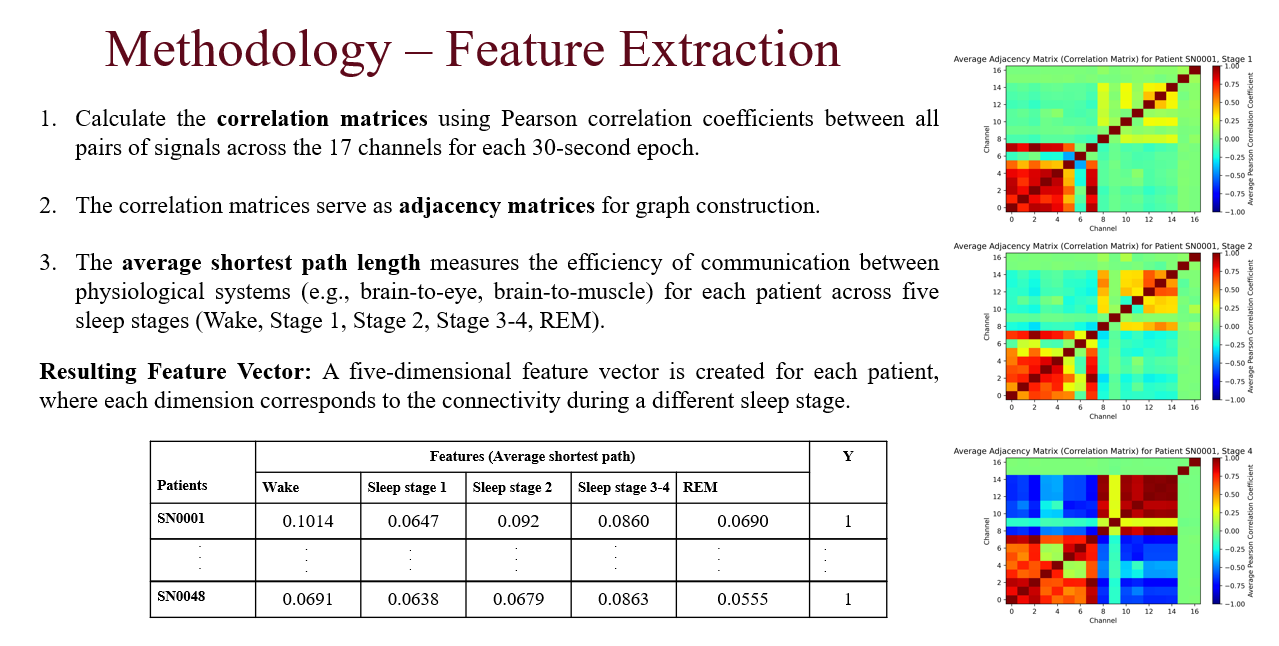
Feature-extraction workflow converting sleep-stage-specific correlations across 17 polysomnography channels into graph-based participant features
Sleep-stage correlation networks are summarized into a five-dimensional graph-based representation for each participant.

Machine Learning-Based Polysomnography Data Analysis for ADHD Diagnosis: A Focus on Sleep Stage-Based Biomarkers

Proceedings of the 2025 IEEE 22nd International Symposium on Biomedical Imaging (ISBI 2025)

CodePaperProject page

Description: This study investigates sleep-stage-specific physiological connectivity as an objective source of ADHD biomarkers. Pearson correlations across 17 EEG, EOG, EMG, and ECG channels are converted into weighted graphs for each participant and sleep stage. Average shortest-path length summarizes each graph, forming a five-dimensional participant representation spanning Wake, Sleep Stages 1, 2, and 3-4, and rapid eye movement sleep. A Random Forest classifier then evaluates these graph-derived features through nested cross-validation.

Outcome: The published study analyzed 48 participants and more than 40,000 30-second PSG epochs. The model achieved average accuracy of 72%, precision of 71%, recall of 85%, and an F1 score of 76%. Feature importance and permutation analysis identified Sleep Stage 1 and Sleep Stage 3-4 as the most influential features for distinguishing ADHD and control participants.

Project support: System Intelligence and Optimization Lab

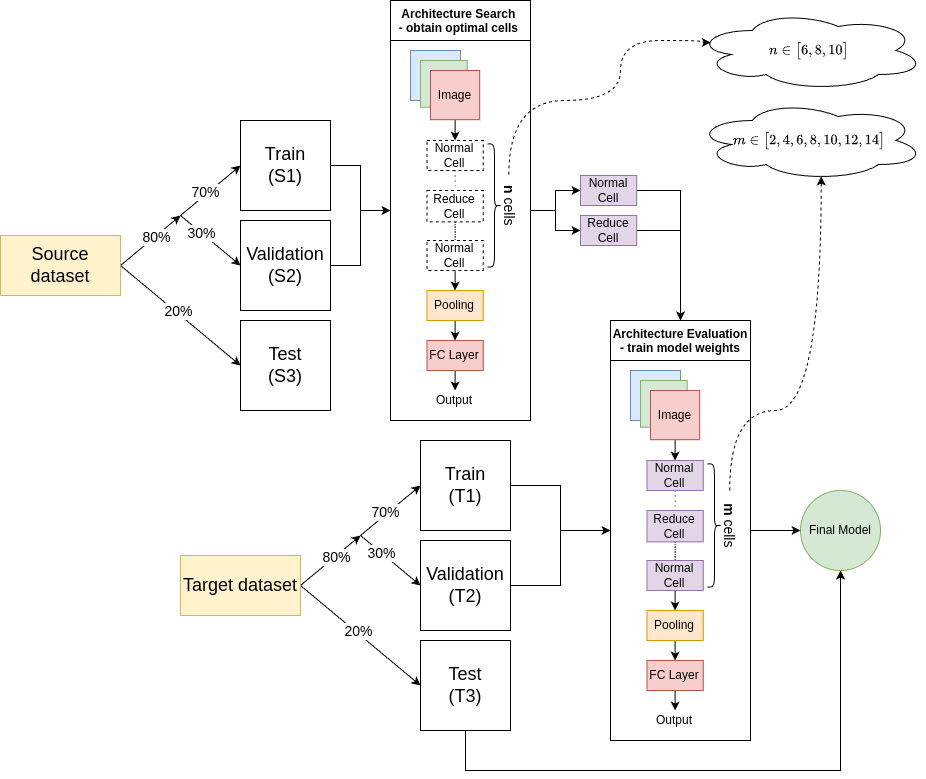
Workflow for searching a neural architecture on a source skin-lesion dataset and evaluating the transferred architecture with newly initialized weights on a target dataset
Architecture transfer preserves the discovered neural structure while learning new weights on each target dataset.

Understanding Knowledge Transferability in Differentiable Architecture Search for Skin Lesion Diagnosis

IISE Transactions on Healthcare Systems Engineering, 16(1), 71-90, 2026

ArticleCodeProject page

Description:This study investigates whether neural architectures discovered through Progressive Differentiable Architecture Search on one skin-lesion dataset remain effective under different acquisition conditions, class distributions, and data scales. The architecture is transferred from dermoscopic ISIC-2019 images to PAD-UFES-20 smartphone images and DermaMNIST, while all target-task weights are initialized and trained anew.

Outcome:The experiments show that transferable P-DARTS architectures remain competitive across datasets, resolutions, and diagnostic formulations. At 224×224 resolution, P-DARTS6 reached mean accuracies of 69.06% on PAD-UFES-20 and 79.48% on DermaMNIST, while the best reported binary PAD-UFES-20 run achieved 97.71%. The analysis also found that evaluation-network depth mattered more than the search-to-evaluation depth gap and that pooling operations were associated with transfer behavior.

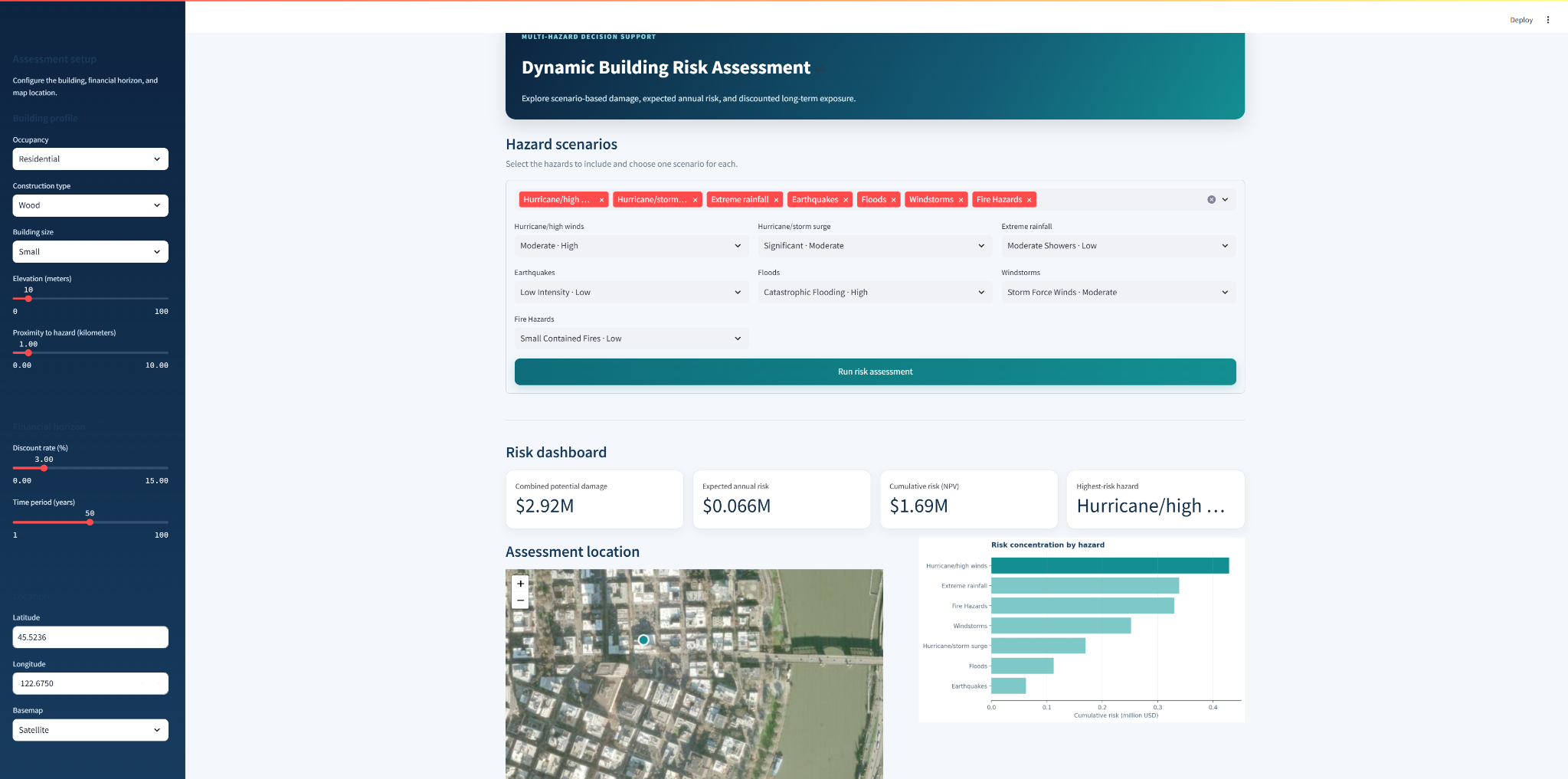
Dynamic Building Risk Assessment dashboard with building controls, hazard scenarios, financial metrics, an assessment map, and ranked hazard risks
Interactive multi-hazard screening with configurable building, financial, scenario, and location inputs.

Dynamic Building Risk Analysis

Interactive Streamlit decision-support prototype

CodeProject page

Description:This interactive application supports configurable, scenario-based screening of building exposure across hurricanes, rainfall, earthquakes, floods, windstorms, snow and ice storms, landslides, and fires. Users can define the building profile, assessment location, selected hazard scenarios, discount rate, and planning horizon.

Outcome:The dashboard converts scenario probabilities and estimated damage into expected annual risk and discounted cumulative risk. It combines financial indicators, geospatial context, hazard ranking, and a detailed results table in a single screenshot-friendly interface.

Teaching and mentoring

I contribute to engineering education through teaching, student mentoring, research supervision, and the development of practical learning resources.

Teaching and mentoring experience